Are you confused about whether to use a VPN or a proxy? You’re not alone.
Both tools promise to protect your privacy and help you access blocked content, but they work very differently. Choosing the right one can make a big difference in your online safety and browsing experience. You’ll discover which option fits your needs best.
Keep reading to find out how to protect your data and stay secure every time you go online.

Credit: blog.torguard.net
Vpn Basics
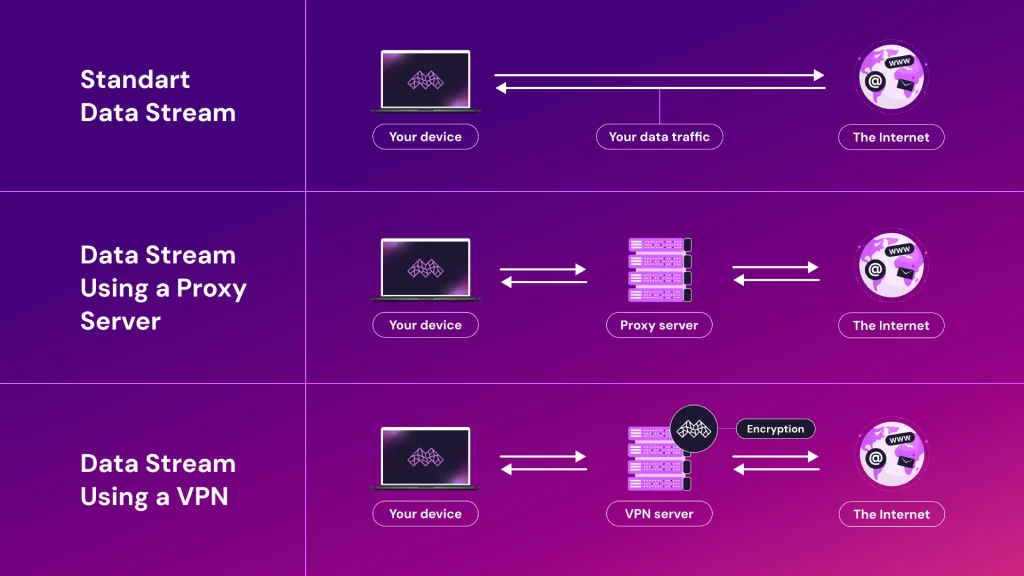
A VPN(Virtual Private Network) creates a secure link between your device and the internet. It hides your real IP addressand encrypts data. This makes your online actions private and safe from hackers or spies.
There are different types of VPNs. Some are for personal use, others for businesses. Personal VPNs protect your privacy online. Business VPNs connect employees to company networks securely.
VPN encryptionscrambles your data so no one can read it. Common methods include AES-256, which is very strong. Encryption keeps your information safe even on public Wi-Fi.
Proxy Fundamentals
A proxyacts as a middleman between your device and the internet. It sends requests for websites or data on your behalf. This helps hide your real IP address. Proxies can also help access content blocked in some areas.
There are several types of proxies:
- HTTP proxieswork with web pages only.
- SOCKS proxieshandle any kind of traffic.
- Transparent proxiesdo not hide your IP but can cache data.
- Anonymous proxieshide your IP but show you use a proxy.
Proxies have some limits. They usually only protect specific apps, not all traffic. They do not encrypt your data, so it can be seen by others. Many websites can detect and block proxies. Also, proxies do not protect against hackers or spies.
Security Comparison
VPNs offer strong encryptionthat hides all online data. This makes it very hard for others to see your info. Proxies do not encrypt data well, so your info can be seen by others.
Data privacy is higher with VPNs. They do not keep logs of your activity. Many proxies keep logs, which can be risky if shared or hacked.
Anonymity levels differ greatly. VPNs mask your real IP and location fully. Proxies only hide the IP for certain apps or browsers, not the whole device.
| Feature | VPN | Proxy |
|---|---|---|
| Encryption Strength | Strong, protects all data | Weak or none |
| Data Privacy | No logs, high privacy | May keep logs, less private |
| Anonymity Levels | High, hides device IP fully | Low, hides only app/browser IP |
Credit: proxidize.com
Performance Differences
VPNsoften slow down internet speed because they encrypt all data. Encryption takes time and can cause delays. Proxiesusually have less impact on speed since they only change your IP address without full encryption.
VPNs provide more stable connectionssince they use dedicated servers. Proxies might disconnect more often because they rely on shared servers.
| Factor | VPN | Proxy |
|---|---|---|
| Speed Impact | Slower due to encryption | Faster, less encryption |
| Connection Stability | More stable, dedicated servers | Less stable, shared servers |
| Bandwidth Usage | Higher, encrypts all data | Lower, only IP changes |
Use Cases
Streaming and Gaming:VPNs help access content safely and hide your IP address. They offer strong security for private browsing. Proxies can change your IP but lack encryption, so they are less safe for gaming or streaming.
Bypassing Geo-Restrictions:VPNs work well to bypass geo-blocks by routing traffic through different countries. Proxies also do this but may be slower and less reliable. VPNs hide your location better.
Corporate Security:VPNs protect company data by encrypting all connections. Employees can work safely from anywhere. Proxies only mask IPs and do not protect data fully, so they are less secure for business use.
Cost And Accessibility
VPNsusually cost more than proxies. This is because VPNs offer stronger securityand more features. Many VPNs use a monthly or yearly subscription plan. Proxiesare often cheaper or free but may have fewer options.
Setting up a proxy is quick and simple. You just change the browser settings. VPNs require installing an app and some setup. Still, most VPNs have easy guidesto help users.
| Device Type | VPN Compatibility | Proxy Compatibility |
|---|---|---|
| Windows | Works on all versions | Works on all versions |
| Mac | Fully supported | Supports browsers only |
| Mobile (iOS/Android) | Apps available for both | Limited support, mostly browser use |
| Smart TVs | Some VPN apps available | Rarely supported |
Choosing The Right Option
VPNsare best for strong privacy and security. They encrypt your internet traffic. This keeps your data safe from hackers and spies. VPNs also hide your real location. Good for public Wi-Fi or private browsing.
Proxieswork well to access blocked websites. They change your IP address but do not encrypt data. Faster than VPNs but less secure. Useful for streaming or simple web browsing.
Using both VPN and proxycan give extra benefits. Proxy handles web requests while VPN protects all data. This combo can improve speed and security. But it may slow down internet sometimes.
Credit: blogs.amospeter.co.ke
Frequently Asked Questions
What Is The Main Difference Between Vpn And Proxy?
A VPN encrypts all your internet traffic, ensuring privacy and security. A proxy only reroutes browser traffic without encryption. VPNs offer full device protection, while proxies work on specific apps or browsers.
Which Is Better For Online Privacy: Vpn Or Proxy?
VPNs provide stronger online privacy by encrypting data and hiding your IP address. Proxies offer limited privacy and can expose your data to risks since they lack encryption.
Can Vpn Or Proxy Unblock Geo-restricted Content?
Both VPNs and proxies can unblock geo-restricted content. However, VPNs are more reliable as they mask your IP and encrypt traffic, avoiding detection by streaming services.
Do Vpns Slow Down Internet Speed More Than Proxies?
VPNs can slow internet speed due to encryption overhead. Proxies usually have less impact but offer weaker security. Choosing a fast VPN can minimize speed loss.
Conclusion
Choosing between a VPN and a proxy depends on your needs. VPNs protect your data and keep you safer online. Proxies can hide your IP but offer less security. For privacy and strong protection, a VPN works best. For simple tasks, a proxy might be enough.
Think about speed, security, and what you want to do. Both tools help you browse differently. Make your choice based on what matters most to you. Stay safe and enjoy your internet experience.