Choosing the right VPN can feel overwhelming with so many options out there. If you’re trying to decide between Hotspot Shield and TunnelBear VPN, you’re in the right place.
Both promise to keep your online activity safe and private, but which one truly delivers the best protection and speed for your needs? By the end of this article, you’ll have a clear picture of how these two VPNs compare, helping you make a confident choice that fits your lifestyle.
Keep reading to discover which VPN will protect your online world without slowing you down.
Speed Comparison
Speed plays a big role when choosing a VPN. It affects how fast you can browse, stream, or download files. Comparing Hotspot Shield and TunnelBear shows clear differences in speed performance. Let’s break down their speed in key areas.
Download And Upload Rates
Hotspot Shield offers faster download speeds than TunnelBear in most tests. It often reaches high Mbps, making downloads quick and smooth. TunnelBear provides decent speeds but usually slower than Hotspot Shield. Upload speeds also favor Hotspot Shield for faster file sharing. TunnelBear’s upload rates are steady but not as fast.
Latency And Ping Times
Latency is how long data takes to travel. Hotspot Shield has lower latency, meaning less delay for online activities. This helps with smoother video calls and gaming. TunnelBear has slightly higher ping times, causing minor delays. Both work well for general use, but Hotspot Shield feels quicker.
Performance On Different Devices
Hotspot Shield performs well on phones, tablets, and computers. Its speed stays consistent across devices. TunnelBear is user-friendly but shows more speed drops on mobile devices. Desktop speeds are better but still behind Hotspot Shield. Choose Hotspot Shield for steady speed on all gadgets.
Security Features
Security features are the heart of every VPN service. They protect your data and keep your online activities private. Hotspot Shield and TunnelBear offer strong security tools to ensure safe browsing. Let’s explore their key security features.
Encryption Standards
Hotspot Shield uses AES 256-bit encryption. This is a very strong standard trusted worldwide. It scrambles data, making it unreadable to hackers. TunnelBear also uses AES 256-bit encryption. This keeps your information safe from spying.
Leak Protection
Leak protection stops your real IP address from being exposed. Hotspot Shield has built-in leak protection to block data leaks. TunnelBear also offers strong leak protection. It prevents your location and identity from leaking online.
Kill Switch Functionality
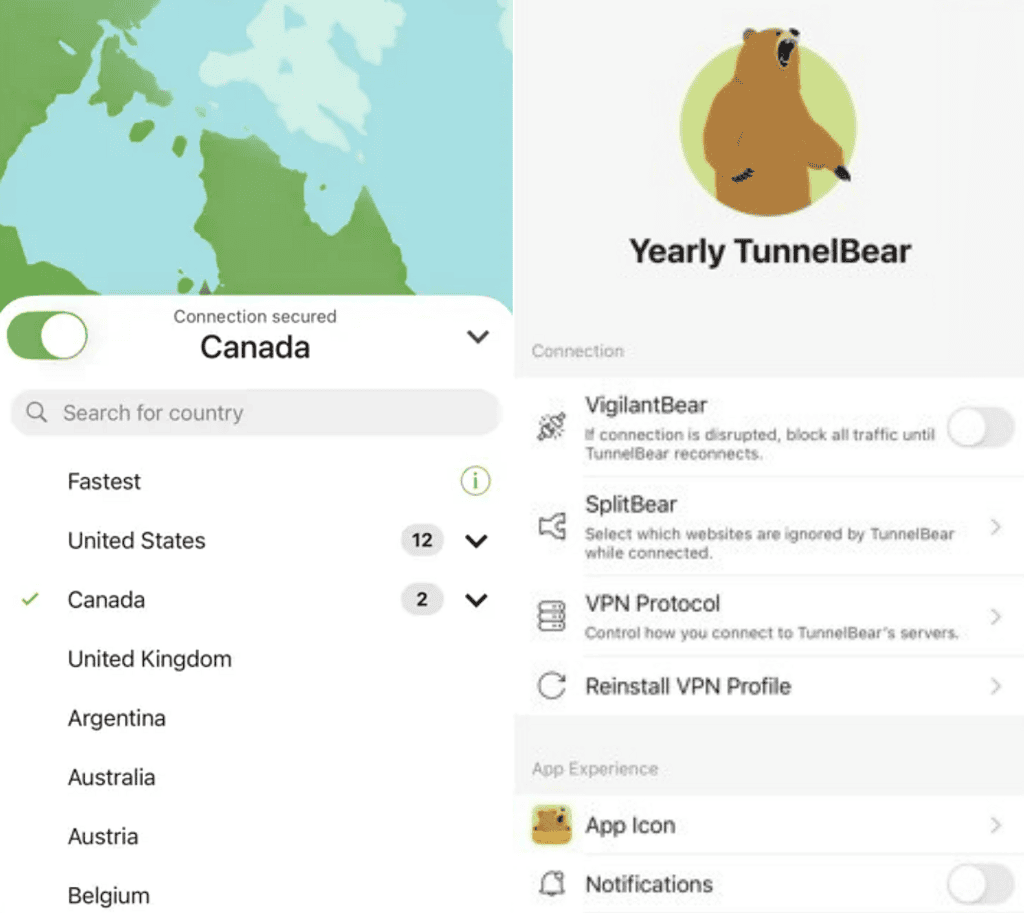
A kill switch stops internet access if the VPN connection drops. Hotspot Shield includes a reliable kill switch feature. It keeps your data from being exposed during connection loss. TunnelBear has a kill switch too, called Vigilant Mode. It ensures your privacy stays intact at all times.
Privacy Policies
Privacy policies reveal how VPN services protect your data. They explain what information the VPN collects and how it is used. Understanding these policies helps you pick the right VPN for your needs. Hotspot Shield and TunnelBear have different approaches to privacy. Let’s explore their policies in detail.
Data Logging Practices
Hotspot Shield collects some connection data. It logs session durations and bandwidth use. It claims not to store browsing history or user activity. TunnelBear keeps minimal logs. It records basic information like email and payment details. It does not log sites visited or traffic content. TunnelBear’s strict no-logging policy offers strong privacy.
Jurisdiction And Legal Implications
Hotspot Shield operates under US laws. The US has strict data surveillance rules. This may affect your privacy rights. TunnelBear is based in Canada. Canada is part of the Five Eyes alliance. This means it can share data with other countries. Both VPNs must comply with local laws. This can influence how user data is handled.
User Anonymity Measures
Hotspot Shield uses encryption to protect your data. It offers IP masking to hide your location. TunnelBear also encrypts user traffic. It uses strong protocols to secure connections. Both VPNs provide kill switches. These stop data leaks if the VPN drops. TunnelBear adds a GhostBear mode to hide VPN use. Hotspot Shield focuses on speed with privacy.

Credit: www.macobserver.com
Server Network
Server network plays a key role in VPN performance. It affects speed, access, and reliability. Comparing Hotspot Shield and TunnelBear helps choose the best option. Both VPNs offer unique server networks. Understanding their differences guides your decision.
Number Of Servers
Hotspot Shield has over 3,200 servers worldwide. TunnelBear offers about 2,600 servers. More servers can mean less crowding and faster speeds. Hotspot Shield has a slight edge in server count.
Geographical Coverage
Hotspot Shield covers 80+ countries. TunnelBear covers around 40 countries. Hotspot Shield reaches more continents and regions. TunnelBear focuses on popular locations. More coverage means more chances to bypass geo-blocks.
Server Reliability
Hotspot Shield uses proprietary Catapult Hydra protocol for stability. TunnelBear relies on OpenVPN and IKEv2 protocols. Both offer strong encryption and stable connections. Hotspot Shield may offer better speed consistency. TunnelBear is known for simple, steady connections.
User Interface And Experience
User interface and experience are important for any VPN service. They affect how easily users can connect and protect their privacy. Hotspot Shield and TunnelBear both offer unique designs. Each focuses on simplicity but in different ways. Examining their ease of use, customization options, and customer support helps choose the best option.
Ease Of Use
Hotspot Shield features a clean and simple layout. Users can connect with one click. The app shows the current server and connection status clearly. TunnelBear uses a fun, bear-themed interface. It shows a map with locations and animated bears. This visual style makes it easy to pick a server. Both apps work well on desktop and mobile devices.
Customization Options
Hotspot Shield offers some settings for connection protocols and auto-connect. It allows users to choose servers manually or use the fastest option. TunnelBear has fewer customization options. It focuses on quick connections and simple controls. Users can select locations but cannot change many technical settings. This suits users who want a straightforward experience without complexity.
Customer Support
Hotspot Shield provides 24/7 live chat and email support. Its help center has many guides and FAQs. TunnelBear offers email support and a detailed help section. It does not have live chat. Both VPNs respond quickly to user questions. Hotspot Shield’s live chat may help solve problems faster for some users.
Pricing And Plans
Understanding the pricing and plans of Hotspot Shield and TunnelBear helps you choose the best VPN service. Both offer free and paid versions. Each plan fits different needs and budgets. Let’s explore what they provide.
Free Vs Paid Versions
Hotspot Shield offers a free plan with daily data limits. It allows basic browsing but restricts speed and access to some servers. TunnelBear’s free version gives 500MB of data per month. It suits light users who want to test the service. Paid plans remove data limits and offer faster speeds. They also unlock all server locations.
Subscription Options
Hotspot Shield has monthly, yearly, and multi-year subscriptions. Longer plans reduce the monthly cost. TunnelBear provides monthly and yearly options. The yearly plan is more budget-friendly. Both VPNs support multiple devices on one account. Payment methods include credit cards and PayPal.
Value For Money
Hotspot Shield’s paid plans cost a bit more but include extra features. These features improve security and speed. TunnelBear is cheaper and easy to use. It fits users who want simple, reliable protection. Both VPNs offer good value depending on your needs. Check features carefully before deciding.
Compatibility
Compatibility is a key factor when choosing a VPN. It affects how easily you can use the service on your devices. Hotspot Shield and TunnelBear offer different levels of support for various platforms. Understanding their compatibility helps you decide which VPN fits your needs.
Supported Platforms
Hotspot Shield supports Windows, macOS, Android, and iOS. It also works on Linux, but with limited features. TunnelBear supports Windows, macOS, Android, and iOS as well. TunnelBear does not officially support Linux. Both VPNs cover the main operating systems well.
Simultaneous Connections
Hotspot Shield allows up to five devices to connect at once. TunnelBear offers five simultaneous connections too. This means you can protect your phone, laptop, and tablet all at once. Both VPNs provide enough connections for average users.
Browser Extensions
Hotspot Shield offers browser extensions for Chrome and Firefox. These extensions provide quick access and easy control. TunnelBear also has browser extensions for Chrome and Opera. Both VPNs make browsing safer with these tools.

Credit: vpnalert.com
Streaming And Torrenting
Streaming videos and downloading files safely matters to many internet users. VPNs help protect privacy and allow access to content from other countries. Hotspot Shield and TunnelBear are popular VPNs for these tasks. Their features affect how well they work for streaming and torrenting.
Access To Geo-restricted Content
Hotspot Shield can access many streaming sites blocked in some countries. It works with platforms like Netflix, Hulu, and BBC iPlayer. TunnelBear also lets you watch geo-blocked content but has fewer supported sites. Both VPNs hide your location to help bypass these restrictions.
P2p Support
Hotspot Shield supports peer-to-peer (P2P) file sharing on many servers. This feature is important for torrenting safely. TunnelBear allows P2P on all servers but limits data for free users. Both VPNs encrypt your traffic to keep downloads private and secure.
Speed Impact On Streaming
Hotspot Shield uses fast servers, which helps smooth video streaming. Speeds stay stable even on busy networks. TunnelBear’s speed is good but can slow during peak times. Both VPNs reduce speed slightly due to encryption, but Hotspot Shield often feels quicker for HD streaming.

Credit: vpnoverview.com
Frequently Asked Questions
Which Vpn Is Faster: Hotspot Shield Or Tunnelbear?
Hotspot Shield generally offers faster speeds due to its proprietary Hydra protocol. TunnelBear’s speeds are good but can be slower on long-distance servers. For streaming or gaming, Hotspot Shield is often preferred for better performance and lower latency.
Is Hotspot Shield Or Tunnelbear Better For Privacy?
Both VPNs provide strong privacy features, but Hotspot Shield has faced some past privacy concerns. TunnelBear uses independent audits to prove its no-logging policy. For strict privacy, TunnelBear’s transparency may be more reassuring.
Which Vpn Offers More Server Locations?
Hotspot Shield has a larger server network, covering over 80 countries. TunnelBear offers servers in around 23 countries. If you need wide global coverage, Hotspot Shield provides more options.
Are Hotspot Shield And Tunnelbear Good For Streaming?
Hotspot Shield works well with popular streaming services due to its speed and unblocking capabilities. TunnelBear can access some streaming platforms but is less consistent. For reliable streaming, Hotspot Shield is the better choice.
Conclusion
Both Hotspot Shield and TunnelBear offer strong VPN services. Hotspot Shield provides fast speeds and easy setup. TunnelBear focuses on user-friendly design and good privacy. Choosing the right VPN depends on your needs. Consider what matters more: speed or simplicity.
Both protect your online activity well. Try each to see which fits best. Stay safe and enjoy better internet privacy.