Choosing the right ERP software can make or break your business’s efficiency and growth. You want a system that fits your unique needs, streamlines your processes, and saves you time and money.
But when it comes to top ERP solutions, Odoo and SAP Business One often come up as the leading contenders. Which one is truly the best fit for your business? You’ll get a clear, straightforward comparison of Odoo vs SAP Business One—covering everything from features and pricing to ease of use and scalability.
By the end, you’ll have the insights you need to make a confident decision that drives your business forward. Keep reading to discover which ERP software could be your game-changer.
Credit: techie-world.com
Erp Market Landscape
ERP softwareplays a crucial role in managing business operations. It helps companies organize their tasks, resources, and information in one place. This improves efficiency and reduces errors.
Different businesses need different ERP features. Small companies want simple, low-cost solutions. Big companies need powerful systems that handle complex processes. Medium-sized firms look for a balance between cost and functionality.
Choosing the right ERP depends on company size, budget, and goals. Some software offers modular designs, letting businesses add features over time. Others provide all-in-one packages for quick setup.
| Target Audience | ERP Needs |
|---|---|
| Small Businesses | Easy to use, affordable, basic features |
| Medium Businesses | Scalable, flexible modules, balanced cost |
| Large Enterprises | Advanced features, high customization, strong support |
Odoo Features
Odoo uses a modular architecturethat lets users add only needed features. This saves money and makes the system easier to use. The user interfaceis simple and clean, helping users find what they want quickly. It works well on phones, tablets, and computers, so you can work anywhere.
Odoo’s CRM and marketing toolshelp track customers and send emails. They make managing sales and campaigns easier. The software allows customization and flexibility, so you can change it to fit your business needs without much trouble. This helps businesses grow and adapt fast.
Sap Business One Features
Financial managementin SAP Business One helps track expenses and income easily. It supports accounting, banking, and budgeting tasks to keep money matters clear and organized.
Inventory and production planningfeatures allow businesses to manage stock levels and plan manufacturing efficiently. This reduces waste and avoids running out of important items.
The software suits medium and large enterpriseswell. It can handle complex business processes and growing company needs without slowing down.
Integration capabilitiesconnect SAP Business One with other apps and systems. This helps data flow smoothly between departments, saving time and reducing errors.
Credit: smarttek.solutions
Pricing And Licensing
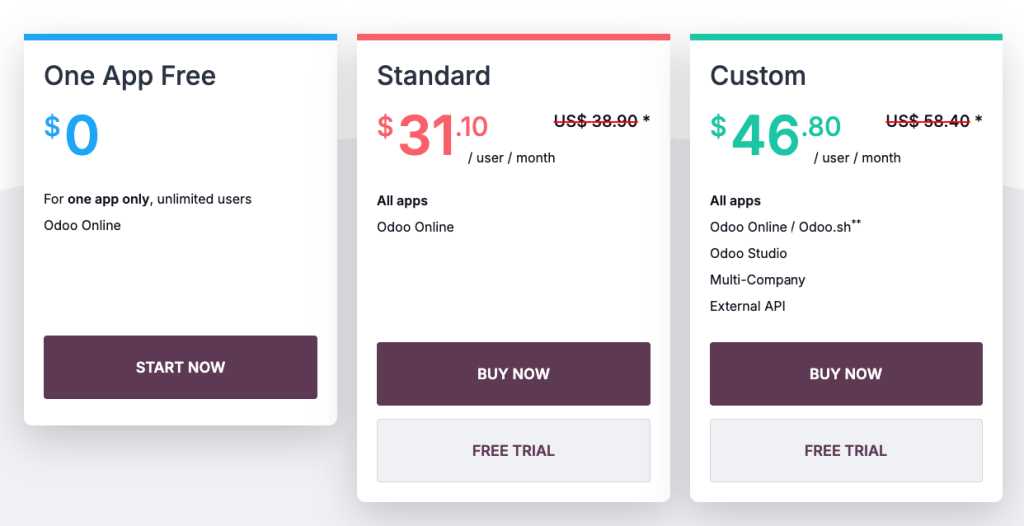
Odoouses an open-source model, making its base software free. Costs arise from paid apps and hosting. This model suits small to medium businesseswell.
SAP Business Onefollows a proprietary license. It requires buying licenses upfront, often costing more. It is designed for medium to large companies.
| Aspect | Odoo | SAP Business One |
|---|---|---|
| License Type | Open Source with paid modules | Proprietary license |
| Initial Cost | Low to moderate | High upfront |
| Implementation | Flexible but can be complex | Structured but costly |
| Best for | Small to medium businesses | Medium to large enterprises |
Implementation costsvary. Odoo may need more time due to customization. SAP usually has higher fees but faster setup with consultants.
Deployment And Setup
Odoooffers a modular installation process. It allows users to pick only needed apps. This makes setup quicker and simpler for small businesses. Some users find initial installation a bit slow, but overall it is user-friendly.
SAP Business Onehas a more traditional setup. It is designed for medium to large companies. Installation can take longer due to more complex features. Expert help is often needed for smooth implementation.
| Feature | Odoo | SAP Business One |
|---|---|---|
| Ease of Implementation | Modular and flexible, but setup may be slow | Complex, often requires expert assistance |
| Hosting Options | Cloud, on-premise, or hybrid | Primarily on-premise, some cloud options |
Hostingchoices vary. Odoo supports cloud, on-premise, and hybridhosting. SAP Business One mainly runs on-premise but offers some cloud options. This affects how fast the system is up and running.

Credit: dailyblogtips.com
Scalability And Flexibility
Odoooffers high scalability, allowing businesses to start small and grow easily. It uses a modular system, so companies can add features as needed. This makes Odoo very flexiblefor different business sizes and types.
SAP Business Oneis designed mainly for small to medium-sized businesses. It supports growth but has a more fixed structure. It can handle more users and data but may need extra setup to grow smoothly.
| Feature | Odoo | SAP Business One |
|---|---|---|
| Customization | High, easy to modify modules | Moderate, needs expert help |
| Industry Solutions | Wide range, thanks to apps | Focus on manufacturing, retail, services |
| Adaptability | Very flexible for growth | Good but less flexible |
User Satisfaction And Support
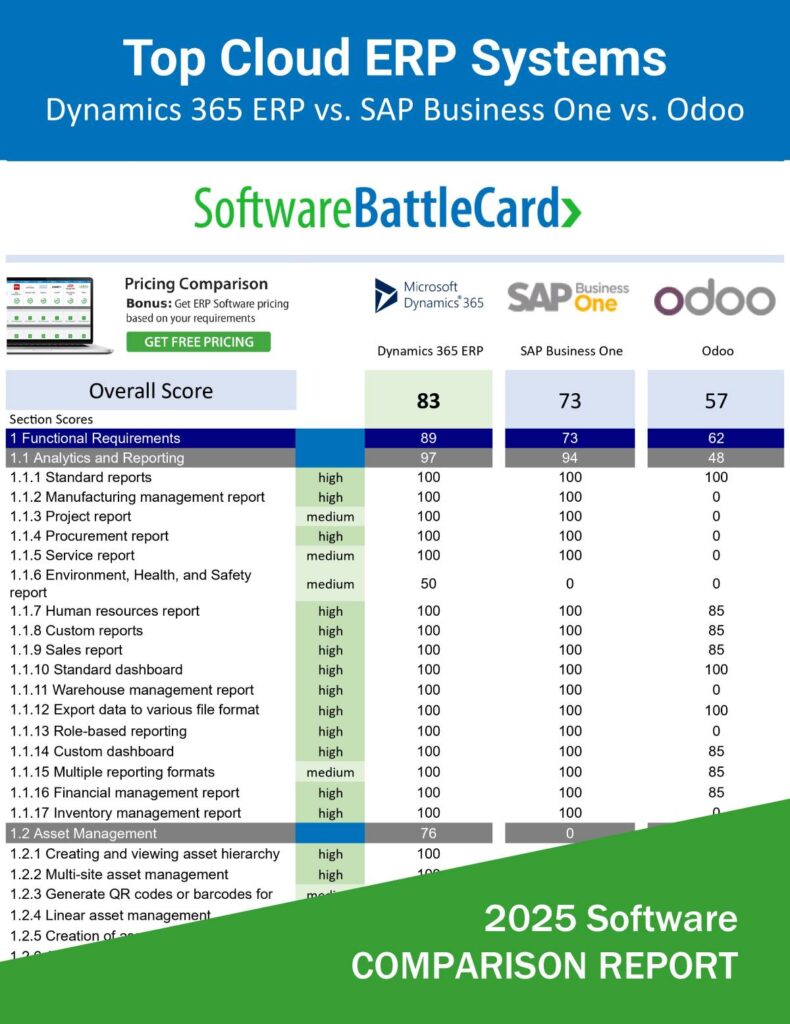
Customer feedbackshows mixed reviews for both Odoo and SAP Business One. Odoo users praise its flexibilityand modular design, while some find the initial setup complex. SAP Business One customers often mention its robustnessbut note it may be costlyfor small businesses.
Training and documentation vary in quality. Odoo provides a large libraryof online resources and tutorials, helping users learn at their own pace. SAP Business One offers structured training programsbut can be less accessible without vendor support.
The community and vendor support also differ. Odoo has a strong open-source communitythat shares tips and modules worldwide. SAP Business One relies more on official vendor supportand certified partners, which can mean faster, but sometimes pricier, assistance.
Pros And Cons
Odoooffers a flexible modular designthat adapts to many business types. It is easy to customize and has a user-friendly interface. Small and medium businesses find it affordable. Odoo also supports many apps for sales, inventory, and accounting.
SAP Business Oneis built for larger companiesbut works for medium ones too. It has strong data managementand advanced reportingtools. SAP Business One integrates well with other SAP products and offers good support.
Common challenges include complex setupfor both systems. Odoo can be slow to install and may need expert help. SAP Business One has high costsfor licensing and maintenance. Both require training for staff to use effectively.
Choosing The Right Erp
Choosing the right ERP depends on business size. SAP Business One fits large and medium companies. Odoo works well for small, medium, and large businesses. Its modular designallows easy adaptation to different needs.
Budget constraintsplay a big role. Odoo is more affordablebecause it is open source. SAP usually has higher licensing and implementation costs. Companies with limited budgetsoften prefer Odoo.
Feature prioritizationmatters too. SAP offers robust featuresfor complex operations. Odoo provides flexible modulesthat can be added over time. Businesses should list their must-have featuresbefore choosing.
Frequently Asked Questions
Which Is Better Sap Or Odoo?
SAP suits large enterprises with complex needs, while Odoo offers flexible, modular solutions ideal for small to medium businesses. Odoo is more affordable and easier to customize. Choose based on company size, budget, and specific business requirements.
What Is The Disadvantage Of Using Odoo?
Odoo’s main disadvantage is its complex setup, which can delay implementation and require technical expertise. It may not suit large enterprises needing advanced customization.
Is Sap Discontinuing Business One?
SAP is not discontinuing Business One. It continues to support and develop the solution for small and medium businesses.
Will Odoo Replace Sap?
Odoo will not replace SAP entirely. Odoo suits small to medium businesses, while SAP targets large enterprises with complex needs. Both serve different markets with unique strengths.
Conclusion
Choosing between Odoo and SAP Business One depends on your business needs. Odoo offers flexibility and suits various company sizes. SAP Business One works well for larger or medium businesses needing robust solutions. Both have strengths and challenges in setup and cost.
Think about your budget, company size, and required features. Careful evaluation will help you pick the right ERP software. Good planning ensures smoother operations and better resource management. Choose the option that fits your goals and grows with your business.