Have you ever wondered what your visitors really do when they land on your website? Understanding their behavior can unlock powerful insights to improve your site and boost your results.
A visitor behavior tracking tool gives you this exact advantage. It shows you where your visitors click, how they scroll, and what keeps them engaged—or makes them leave. Imagine having this kind of clear, real-time data at your fingertips. You’ll discover how using a visitor behavior tracking tool can transform your approach, help you make smarter decisions, and ultimately grow your online success.
Keep reading to find out how to turn every visit into an opportunity.
Why Track Visitor Behavior
Tracking visitor behavior helps website owners understand how users interact with their site. It shows what catches attention and what does not. This data guides improvements that make the site more user-friendly and effective.
Knowing visitor actions helps create better experiences. It supports decisions that increase user satisfaction and business success.
Impact On Conversion Rates
Visitor behavior data reveals which pages lead to sales or sign-ups. It shows where users drop off in the buying process. This insight helps fix issues and improve conversion rates. Small changes based on behavior can lead to more customers and higher revenue.
Identifying User Preferences
Tracking helps discover what visitors like most on the site. It highlights popular products, content, and features. Understanding preferences guides content creation and marketing strategies. This makes the site more appealing and keeps users coming back.
Detecting Pain Points
Visitor behavior shows where users struggle or get frustrated. It could be slow pages, confusing navigation, or broken links. Spotting these pain points allows quick fixes. Removing obstacles makes the site easier to use and improves overall satisfaction.
Credit: www.smartlook.com
Key Features Of Tracking Tools
Visitor behavior tracking tools help website owners understand how users interact with their site. These tools collect data to improve user experience and increase conversions. Key features make these tools powerful and easy to use.
Heatmaps And Click Tracking
Heatmaps show where visitors click the most on a page. They use colors to highlight popular areas. Click tracking records every click to see what attracts attention. These features reveal which parts of a site work well and which need improvement.
Session Recordings
Session recordings capture the entire visit of a user. You can watch how visitors scroll, click, and navigate. This helps identify problems or confusion during the visit. It gives a clear view of real user behavior.
Funnel Analysis
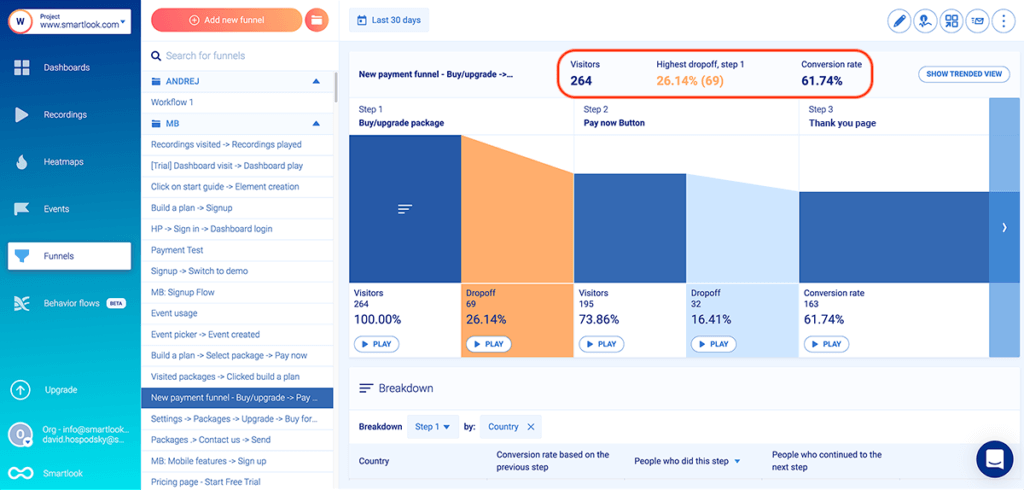
Funnel analysis tracks the steps visitors take to complete a goal. It shows where users drop off in the process. This data helps fix issues and improve the flow. Funnels make it easier to boost sales or sign-ups.
Real-time Analytics
Real-time analytics provide live data about visitor actions. You can see how many users are on the site now. It shows which pages are popular at the moment. This feature helps respond quickly to trends and problems.
Choosing The Right Tool
Choosing the right visitor behavior tracking tool is important for your website’s success. The right tool helps you understand how users interact with your site. It also provides data that can improve user experience and increase conversions. Several factors matter most when picking a tool. These include ease of integration, customization options, data privacy, and cost. Each factor plays a key role in matching the tool with your needs.
Ease Of Integration
Choose a tool that fits easily into your existing setup. It should work with your website platform. A simple installation saves time and effort. Look for tools with clear instructions and support. Fast integration means quicker access to valuable data.
Customization Options
Your tracking tool should adapt to your goals. It must offer options to track specific actions. Custom reports help focus on important metrics. Flexible tools let you tailor features to your needs. This helps get precise insights about visitor behavior.
Data Privacy Compliance
Data privacy is crucial for trust and legal reasons. Pick a tool that follows privacy laws like GDPR or CCPA. It should protect visitor data and offer clear privacy settings. Transparent tools build confidence with your audience and avoid fines.
Cost Considerations
Costs vary widely among tracking tools. Some offer free plans with basic features. Paid versions provide advanced options and better support. Balance your budget with the tool’s benefits. Choose one that delivers value without overspending.

Credit: ossisto.com
Implementing Visitor Tracking
Implementing visitor tracking is a key step in understanding how users interact with your website. It helps you see what visitors do, which pages they visit, and where they spend most time. This information guides you to improve your site and meet your business goals.
Effective tracking starts with careful planning and precise setup. Each step must be clear and tested to ensure accurate data collection. Let’s explore the main stages of implementing visitor tracking.
Setting Clear Goals
Define what you want to learn from visitor tracking. Goals might include increasing sales, improving user experience, or reducing bounce rates. Clear goals help focus your tracking efforts. They guide what data to collect and analyze. Without goals, data can become confusing and less useful.
Tagging And Tracking Setup
Use tracking codes or tags to capture visitor actions on your site. These tags collect data like clicks, page views, and form submissions. Place tags carefully on relevant pages and elements. Choose a reliable tracking tool that fits your needs. Proper setup ensures accurate and useful data collection.
Testing And Validation
Test your tracking setup before fully launching it. Check if tags fire correctly on all pages. Use preview modes or debugging tools from your tracking platform. Validate the data collected matches real user actions. Fix any errors quickly to avoid losing important information.
Analyzing Data For Actionable Insights
Analyzing data from a visitor behavior tracking tool helps you understand how users interact with your website. This insight guides you to make smart changes. You learn what works and what needs fixing. The goal is clear: improve the visitor’s journey and boost engagement.
Identifying Drop-off Points
Drop-off points show where visitors leave your site. Pinpointing these spots helps find problems. Maybe a page loads too slow or content is confusing. Fixing these issues keeps visitors longer. It raises chances they complete actions like buying or signing up.
Segmenting Visitor Types
Visitors behave differently based on their needs or source. Segmenting groups helps tailor your approach. You can separate new visitors from returning ones. Or group by location, device, or referral channel. This data lets you offer content that fits each group well.
Optimizing User Experience
Using data to improve user experience means smoother navigation and clearer design. Identify pages with poor engagement and test changes. Small tweaks in layout or wording can boost satisfaction. A better user experience encourages visitors to stay and explore more.

Credit: www.dreamstime.com
Boosting Conversions With Insights
Visitor behavior tracking tools give clear insights into how users act on your website. This data helps you understand what works and what does not. By using these insights, you can make smart changes that increase conversions. Each visitor’s journey becomes a chance to improve and grow your business.
Personalizing Content
Tracking tools show which content visitors like most. You can then create pages that fit their interests. Personalized content makes users feel valued and understood. This approach keeps visitors longer on your site. It also encourages them to take action, such as signing up or buying.
Improving Call-to-actions
Behavior tracking reveals how users interact with call-to-action buttons. You can see which buttons get clicks and which are ignored. Use this data to change button text, color, or placement. Better call-to-actions guide visitors to complete desired steps. Clear and visible buttons lead to higher conversion rates.
A/b Testing Strategies
Visitor data helps you run A/B tests with real user input. Test different versions of pages or buttons to find the best one. Tracking tools show which version performs better. This method reduces guesswork and improves decision-making. Regular A/B testing keeps your site effective and user-friendly.
Common Challenges And Solutions
Tracking visitor behavior offers valuable insights. Yet, it also brings several challenges. These issues can affect data quality and user trust. Understanding common problems helps find practical solutions. This section explores key challenges and ways to overcome them.
Data Overload
Visitor tracking tools collect large amounts of data. Too much data can confuse and slow analysis. It becomes hard to spot useful trends among noise. Focus on key metrics that matter most for your goals. Use filters and segmentation to narrow down data. Tools with smart dashboards help simplify complex information.
Ensuring Accurate Tracking
Tracking errors reduce data reliability. Problems include missing clicks or incorrect page views. Use well-tested tracking scripts and update them regularly. Test tracking setup on different devices and browsers. Avoid relying on a single data source. Cross-check data with other tools to ensure accuracy.
Maintaining User Privacy
User privacy is a major concern in tracking. Collect only necessary data and avoid personal identifiers. Inform visitors about data collection clearly and transparently. Follow legal rules like GDPR or CCPA strictly. Use anonymization techniques to protect user identity. Respect user choices and provide opt-out options.
Frequently Asked Questions
What Is A Visitor Behavior Tracking Tool?
A visitor behavior tracking tool records how users interact with a website. It helps understand user actions, clicks, and navigation paths. This data improves website design and user experience.
How Does Visitor Behavior Tracking Improve Website Performance?
Tracking shows which pages users like or avoid. It reveals problems like slow loading or confusing layouts. Fixing these boosts user satisfaction and site success.
Is Visitor Behavior Tracking Safe For User Privacy?
Yes, most tools follow privacy laws and anonymize data. They do not collect personal details without consent. Users can browse safely while sites learn from behavior.
Conclusion
Tracking visitor behavior helps you learn what users want most. It shows which pages get attention and where people leave. This information guides changes to improve your website. You can make your site easier to use and more helpful. Visitors stay longer and come back more often.
Using a visitor behavior tracking tool supports smart decisions. It helps you grow your online presence step by step. Keep watching your visitors to keep your website strong. Simple, clear data leads to better results.