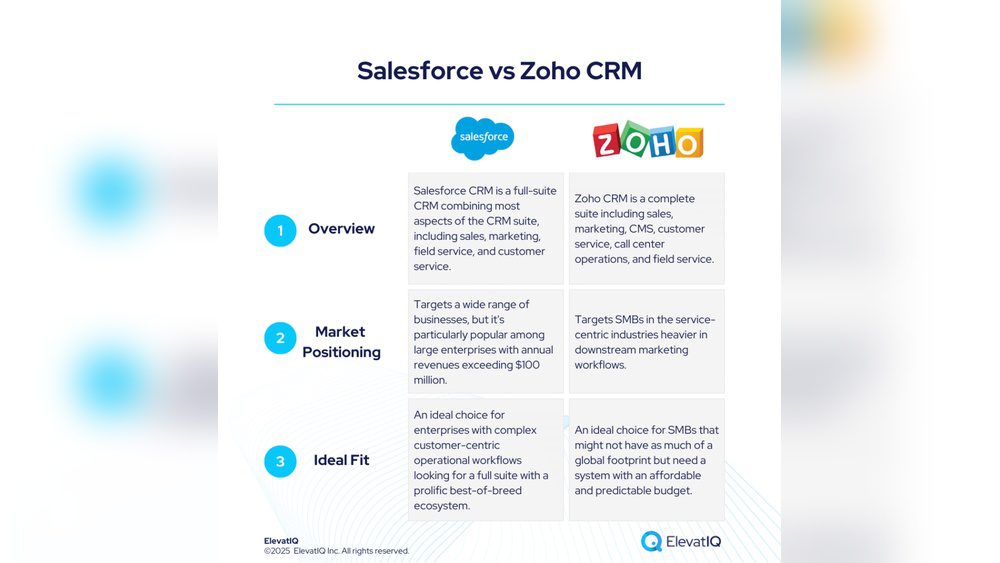
Choosing the right CRM can feel overwhelming. You want a tool that fits your business size, budget, and goals perfectly.
That’s why comparing Zoho CRM and Salesforce is so important. Both are powerful platforms, but they serve different needs. Are you looking for something easy to use and affordable, or do you need a highly customizable system built for large enterprises?
You’ll discover the key differences between Zoho CRM and Salesforce. By the end, you’ll know which one matches your unique business requirements and helps you boost your sales and customer relationships effectively. Keep reading to find out which CRM will work best for you.
Credit: zapier.com
User Interface
The user interface plays a vital role in how effectively a CRM supports daily tasks. Both Zoho CRM and Salesforce offer distinct designs that affect user experience. A clean, intuitive interface helps users save time and reduce errors. Let’s explore how these two platforms compare in terms of navigation and customization.
Ease Of Navigation
Zoho CRM features a simple layout with clear menus and icons. Users can quickly find contacts, deals, and reports without confusion. The dashboard is straightforward, making it easy for new users to adapt.
Salesforce provides a powerful interface but comes with complexity. Its many options and tabs can overwhelm beginners. Users may need time to learn the layout fully. However, once mastered, it supports advanced workflows well.
Customization Options
Zoho CRM allows users to customize dashboards and modules with drag-and-drop tools. This flexibility helps tailor the system to specific business needs. Users can change views and create custom fields easily.
Salesforce offers deeper customization through its Lightning platform. It supports complex page layouts and automation rules. Developers can build custom apps and integrations. This makes it ideal for companies needing unique solutions.
Key Features
Both Zoho CRM and Salesforce offer a range of features designed to improve business processes. Understanding their key features helps businesses choose the right CRM. Each platform provides tools for automation, AI, and integration, but they differ in complexity and scope.
Automation Capabilities
Zoho CRM includes basic automation tools to simplify daily tasks. It allows workflow rules to automate emails, alerts, and field updates. Salesforce offers advanced automation with Process Builder and Flow Builder. These tools create complex workflows and approvals, reducing manual work significantly. Salesforce’s automation fits larger businesses with complex needs.
Ai And Analytics
Zoho CRM uses Zia, an AI assistant that offers predictions and suggestions. It helps with lead scoring, sentiment analysis, and task reminders. Salesforce features Einstein AI, providing deeper analytics and predictive insights. Einstein analyzes customer data to forecast sales trends and recommend actions. Salesforce’s AI tools are more powerful for data-driven decision-making.
Integration Support
Zoho CRM supports integrations with popular apps like Google Workspace, Mailchimp, and social media. It offers an easy setup for common business tools. Salesforce has a vast AppExchange marketplace with thousands of integrations. It connects with ERP, marketing, and customer service platforms. Salesforce’s integration options suit businesses needing extensive system connections.
Pricing Plans
Pricing plans play a crucial role in choosing between Zoho CRM and Salesforce. Both platforms offer multiple tiers to suit different business sizes and needs. Understanding these pricing structures helps decide which CRM fits your budget and goals.
Cost Comparison
Zoho CRM offers affordable plans starting at a low monthly fee. It provides a free plan with limited features, ideal for small teams. Paid plans increase gradually, adding more tools and users.
Salesforce pricing starts higher and has no free plan. It targets larger businesses with complex requirements. Each tier unlocks advanced features but comes at a premium cost.
Both CRMs charge per user per month, but Salesforce’s fees are generally higher. Zoho CRM suits those seeking budget-friendly options. Salesforce fits companies ready to invest in robust capabilities.
Value For Money
Zoho CRM delivers strong value through its simplicity and cost efficiency. Small businesses gain access to essential features without overspending. The platform balances price and functionality well. You can also learn more about Zoho CRM pricing here.
Salesforce offers more advanced tools and customization, which can justify its higher price. Enterprises needing deep integrations and automation find value in its offerings. You can also learn more about Salesforce pricing here.
Choosing between the two depends on your business size and feature needs. Zoho CRM excels in affordability, while Salesforce shines with extensive capabilities.
Credit: www.signitysolutions.com
Target Audience
Choosing the right CRM depends on the type of business and its specific needs. Zoho CRM and Salesforce serve different groups of users based on business size and complexity. Understanding the target audience helps decide which platform fits best.
Small And Medium Businesses
Zoho CRM suits small and medium businesses well. It offers an easy-to-use interface with essential features. The platform has affordable pricing, making it attractive for companies with tight budgets. Small teams can quickly adopt Zoho CRM without a steep learning curve. Basic automation and integrations help improve daily workflows. Zoho CRM supports growth but keeps things simple and manageable. It is ideal for businesses that want value without complexity.
Enterprise Solutions
Salesforce targets larger companies and enterprises. It provides a wide range of advanced features and customization options. The platform handles complex processes and large data volumes. Enterprises benefit from Salesforce’s scalability and robust security. It supports multiple departments and global teams with ease. Salesforce’s tools include deep analytics and AI capabilities. These features help big companies optimize sales and customer management. The higher cost matches the extensive services and flexibility offered.
Customization And Scalability
Customization and scalability are key factors in choosing a CRM platform. They determine how well the software fits your unique needs and grows with your business. Both Zoho CRM and Salesforce offer options for tailoring the system. They also provide paths for expanding capabilities as your company evolves.
Customization Depth
Zoho CRM allows users to adjust fields, layouts, and modules with ease. It supports custom workflows, rules, and automation tailored to specific processes. Users can build custom apps using Zoho’s low-code platform. This makes it easier for small to medium businesses to create a CRM that fits their work style.
Salesforce offers deeper customization options. It provides a robust platform for developers to create complex applications. Users can customize almost every part of the system, from user interface to backend logic. This is ideal for large businesses with unique processes and technical teams to manage the setup.
Scalability For Growth
Zoho CRM scales well for small and mid-sized businesses. It supports increasing users, data, and integrations without much hassle. The platform’s cloud nature ensures smooth performance as needs grow. However, very large enterprises may find some limits in advanced features and customization.
Salesforce is built to scale for enterprises of all sizes. It can handle vast amounts of data and complex business structures. The platform supports thousands of users and extensive third-party integrations. Salesforce’s scalability suits companies planning rapid growth or global operations.

Credit: www.avoma.com
Customer Support
Customer support plays a vital role in choosing the right CRM platform. Both Zoho CRM and Salesforce offer distinct support options. These services help users solve problems quickly and use the software effectively. Understanding the quality of support and available resources can guide businesses to the best choice.
Support Quality
Zoho CRM provides support through email, phone, and live chat. Their response times are generally quick for paid plans. Basic plans have limited access to support channels. Salesforce offers 24/7 support for higher-tier plans. Their team is known for expert assistance and detailed problem-solving. Both platforms have dedicated teams but differ in availability and cost.
Community And Resources
Zoho CRM has an active online community forum. It includes helpful articles, tutorials, and webinars. Users share tips and solutions freely. Salesforce has a larger community with extensive resources. Its Trailhead platform offers free training and certifications. Forums, user groups, and events help users connect and learn. These resources make it easier to maximize each CRM’s features.
Pros And Cons
Understanding the pros and cons of Zoho CRM and Salesforce helps businesses choose the right tool. Each platform has its unique strengths and some drawbacks. These factors affect usability, cost, and overall fit for different company sizes and needs. Here is a clear look at what each CRM offers and what to watch out for.
Strengths Of Zoho Crm
Zoho CRM is budget-friendly, making it ideal for small businesses. The interface is simple and easy to navigate. It includes essential features like automation and AI, which help save time. Zoho offers good integration options with popular apps. Users find setup and customization more straightforward than many other CRMs. Its pricing plans are flexible and affordable. Zoho CRM also provides a mobile app for on-the-go access.
Strengths Of Salesforce
Salesforce excels in its extensive feature set. It supports large enterprises with complex sales processes. The platform offers powerful automation and advanced AI tools. Customization options are vast, allowing tailored workflows. Salesforce integrates with numerous business apps and services. It has strong analytics and reporting capabilities. The system can scale easily as a company grows. Salesforce also has a large user community and support resources.
Limitations To Consider
Zoho CRM may lack some advanced features needed by big companies. Customer support can be slow or less helpful at times. The platform’s AI and automation tools are basic compared to others. Some users report limited customization options for unique needs. Salesforce comes with a higher price tag, which may not suit smaller budgets. Its complexity means a longer learning curve for new users. Setup and maintenance can require dedicated staff or consultants. Both platforms require time to master their full potential.
Making The Right Choice
Choosing between Zoho CRM and Salesforce is not always simple. Both platforms offer strong tools but serve different business types. Your decision depends on how well the CRM fits your company’s needs and plans.
Assessing these factors carefully helps avoid costly mistakes. A CRM that matches your business now and grows with it provides lasting value. Consider the details below to guide your choice.
Business Needs Alignment
Identify your core business requirements first. Zoho CRM suits small to mid-sized companies with straightforward needs. It offers essential features at a lower cost.
Salesforce targets larger enterprises needing complex customization and advanced tools. It supports diverse workflows and large teams.
Match CRM capabilities with your sales processes, team size, and industry demands. A good fit simplifies adoption and improves productivity.
Future Growth Considerations
Plan for your company’s growth over the next few years. Zoho CRM scales moderately but may face limits as needs get complex. It works well for steady, gradual growth.
Salesforce excels in scalability and flexibility. It adapts to expanding teams, global operations, and evolving sales models. Its extensive app ecosystem supports innovation.
Choosing a CRM that grows with your business reduces the need for costly switches. Consider potential changes in market, size, and technology use.
Frequently Asked Questions
Which Crm Is Best, Salesforce Or Zoho?
Salesforce suits large enterprises needing advanced features and customization. Zoho CRM fits small to medium businesses with ease of use and affordability. Both offer scalable solutions, but Salesforce excels in AI and analytics, while Zoho focuses on simplicity and cost-effectiveness.
Choose based on business size and needs.
Which Crm Is Better Than Salesforce?
Zoho CRM is better than Salesforce for small to medium businesses due to its lower cost and user-friendly interface.
What Are The Disadvantages Of Zoho?
Zoho has limited advanced features compared to competitors and may lack robust customization. Customer support can be slow. Users face a learning curve and occasional integration issues. It suits small to medium businesses but may struggle with large enterprise needs.
Conclusion
Choosing between Zoho CRM and Salesforce depends on your business size and needs. Zoho CRM fits small to medium businesses with its simple interface and lower cost. Salesforce suits large companies needing advanced features and deep customization. Both platforms offer useful tools and scalability.
Consider ease of use, budget, and feature needs carefully. The right choice helps your business manage customers better and grow steadily.